
English: Port of Los Angeles USA / Español: Puerto de Los Ángeles EE.UU. / Português: Porto de Los Angeles EUA / Français: Port de Los Angeles États-Unis / Italiano: Porto di Los Angeles USA
The Port of Los Angeles USA stands as a cornerstone of global trade and logistics, serving as the busiest container port in the Western Hemisphere. Located in San Pedro Bay, approximately 32 kilometers south of downtown Los Angeles, it plays a pivotal role in connecting North American markets with international supply chains. As a critical node in maritime transportation, the port facilitates the movement of goods, supports economic growth, and drives innovation in logistics and infrastructure.
General Description
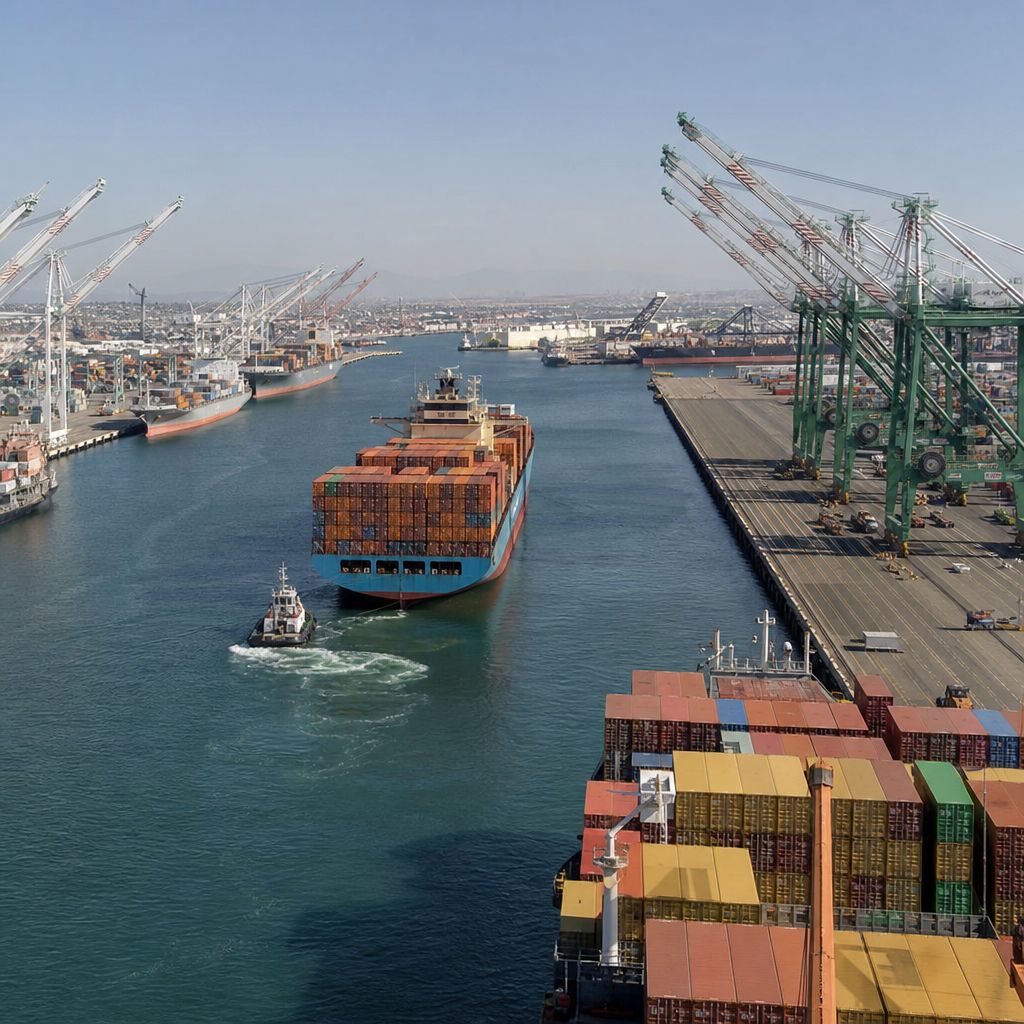
The Port of Los Angeles is a major seaport complex that spans over 3,000 hectares of land and water, making it one of the largest and most advanced ports in the world. It is operated by the City of Los Angeles and governed by the Los Angeles Board of Harbor Commissioners, which oversees its development, operations, and environmental initiatives. The port's strategic location on the Pacific Rim positions it as a gateway for trade between the United States and key markets in Asia, Latin America, and beyond.
The port's infrastructure includes 25 cargo terminals, eight container terminals, and specialized facilities for handling bulk cargo, automobiles, and liquid bulk products such as petroleum and chemicals. Its deep-water channels, with depths of up to 16 meters, accommodate some of the largest container ships in the world, including vessels with capacities exceeding 20,000 twenty-foot equivalent units (TEUs). The port's efficiency is further enhanced by its integration with rail and road networks, enabling seamless multimodal transportation of goods to inland destinations across North America.
In addition to its commercial operations, the Port of Los Angeles is a leader in sustainability and environmental stewardship. It has implemented ambitious programs to reduce emissions, improve air quality, and promote the use of clean energy in port operations. These efforts include the adoption of shore power for docked vessels, the deployment of zero-emission cargo handling equipment, and the development of green infrastructure projects such as solar energy installations. The port's commitment to sustainability has earned it recognition as a model for other ports worldwide.
The economic impact of the Port of Los Angeles is profound, generating billions of dollars in annual revenue and supporting hundreds of thousands of jobs in Southern California and beyond. It serves as a vital link in the global supply chain, handling a diverse range of commodities, including electronics, apparel, furniture, and agricultural products. The port's ability to adapt to changing trade dynamics, such as the growth of e-commerce and shifts in manufacturing centers, underscores its resilience and strategic importance.
Historical Development
The history of the Port of Los Angeles dates back to the late 19th century when the natural harbor of San Pedro Bay was recognized for its potential as a commercial port. In 1897, the U.S. Congress designated San Pedro as the official port of Los Angeles, marking the beginning of its transformation into a major maritime hub. The port's early development was driven by the expansion of railroads, which connected it to the broader U.S. transportation network, and by the growth of industries such as oil, agriculture, and manufacturing in Southern California.
The 20th century saw significant milestones in the port's evolution. The construction of the Panama Canal in 1914 further enhanced its strategic importance by reducing shipping times between the U.S. East Coast and Asia. During World War II, the port played a critical role in supporting military logistics, handling vast quantities of supplies and equipment for the war effort. In the postwar era, the port experienced rapid growth as global trade expanded, and containerization revolutionized maritime shipping in the 1960s and 1970s. The introduction of standardized containers allowed for faster and more efficient cargo handling, positioning the Port of Los Angeles as a leader in the container shipping industry.
In recent decades, the port has continued to modernize its infrastructure to accommodate larger vessels and increasing cargo volumes. Projects such as the expansion of the TraPac Container Terminal and the development of the China Shipping Terminal have enhanced its capacity and efficiency. The port has also invested in digital technologies, such as automated terminal systems and real-time cargo tracking, to improve operational transparency and reduce delays. These advancements have solidified its reputation as a state-of-the-art facility capable of meeting the demands of 21st-century global trade.
Technical Infrastructure
The Port of Los Angeles boasts a sophisticated technical infrastructure designed to handle the complexities of modern maritime logistics. Its container terminals are equipped with advanced cranes, including post-Panamax and super-post-Panamax gantry cranes, capable of loading and unloading containers from the largest ships in the world. These cranes can reach heights of over 40 meters and lift containers weighing up to 65 metric tons, ensuring efficient cargo handling even for the most demanding operations.
The port's intermodal connectivity is a key strength, with direct access to major rail lines operated by Union Pacific and BNSF Railway. These rail connections enable the rapid movement of containers to inland distribution centers, reducing transit times and lowering transportation costs. The port also features on-dock rail facilities, which allow containers to be transferred directly from ships to trains, minimizing the need for truck transportation and reducing congestion on local roadways.
In terms of digital infrastructure, the Port of Los Angeles has implemented cutting-edge technologies to enhance operational efficiency and security. The port's "Port Optimizer" platform, developed in collaboration with GE Transportation, provides real-time data on cargo movements, vessel schedules, and terminal operations. This system improves coordination among stakeholders, including shipping lines, terminal operators, and customs authorities, and helps mitigate bottlenecks in the supply chain. Additionally, the port employs advanced security measures, such as radiation detection systems and automated gate systems, to ensure the safety and integrity of cargo.
Application Area
- Global Trade and Commerce: The Port of Los Angeles is a critical hub for international trade, handling over 9 million TEUs annually. It serves as a primary entry point for goods imported from Asia, including electronics, textiles, and machinery, as well as a key export gateway for U.S. products such as agricultural goods, automobiles, and industrial equipment.
- Supply Chain and Logistics: The port plays a central role in global supply chains, providing connectivity between manufacturers, distributors, and retailers. Its efficient operations and multimodal transportation options enable businesses to optimize their logistics networks and reduce lead times for deliveries.
- Industrial and Manufacturing Support: The port supports a wide range of industries by facilitating the import and export of raw materials, components, and finished products. Its proximity to major manufacturing centers in Southern California and the southwestern U.S. makes it an ideal location for companies reliant on just-in-time inventory systems.
- Automotive and Bulk Cargo Handling: In addition to containerized cargo, the port handles specialized shipments such as automobiles, steel, and liquid bulk products. Its auto terminals, including the Port of Los Angeles Auto Terminal, are among the largest in North America, processing millions of vehicles annually.
- Environmental and Sustainability Initiatives: The port is a leader in sustainable port operations, with programs aimed at reducing greenhouse gas emissions, improving air quality, and promoting renewable energy. Its "Clean Air Action Plan" (CAAP) sets ambitious targets for zero-emission operations and has served as a blueprint for other ports worldwide (Source: Port of Los Angeles, 2023).
Well Known Examples
- TraPac Container Terminal: One of the most advanced container terminals at the Port of Los Angeles, TraPac features automated stacking cranes and a fully electrified rail system. It is capable of handling over 2 million TEUs annually and serves as a model for efficiency and sustainability in terminal operations.
- China Shipping Terminal: This terminal, operated by China Shipping Container Lines, is one of the largest at the port and plays a key role in trans-Pacific trade. It features deep-water berths and state-of-the-art cargo handling equipment, making it a critical node for imports from Asia.
- Port of Los Angeles World Cruise Center: While primarily known for cargo operations, the port also serves as a major hub for cruise ships. The World Cruise Center accommodates some of the largest cruise vessels in the world and supports the region's tourism industry.
- Alameda Corridor: A 32-kilometer freight rail expressway that connects the Port of Los Angeles to the national rail network, the Alameda Corridor reduces transit times and congestion by consolidating rail traffic into a single, high-capacity corridor. It is a critical component of the port's intermodal infrastructure.
- San Pedro Bay Ports Clean Air Action Plan (CAAP): A collaborative initiative between the Port of Los Angeles and the neighboring Port of Long Beach, the CAAP aims to reduce emissions from port-related activities by transitioning to zero-emission technologies and cleaner fuels. The plan has achieved significant reductions in pollutants such as nitrogen oxides and diesel particulate matter (Source: Port of Los Angeles, 2023).
Risks and Challenges
- Environmental Impact and Emissions: Despite its sustainability efforts, the Port of Los Angeles remains a significant source of air pollution due to emissions from ships, trucks, and cargo handling equipment. Balancing economic growth with environmental goals remains a ongoing challenge, particularly as cargo volumes continue to rise.
- Congestion and Infrastructure Limitations: The port's high cargo volumes can lead to congestion, particularly during peak shipping seasons. Delays in cargo handling, rail transportation, and trucking can disrupt supply chains and increase costs for businesses. Expanding infrastructure to accommodate growing demand is a complex and costly endeavor.
- Labor Disputes and Workforce Challenges: The port relies on a large workforce of longshoremen, truck drivers, and terminal operators. Labor disputes, such as strikes or slowdowns, can have severe consequences for global trade and highlight the need for stable labor relations and workforce development programs.
- Cybersecurity Threats: As the port increasingly relies on digital technologies for operations and cargo tracking, it becomes vulnerable to cyberattacks. Ensuring the security of its IT systems and protecting sensitive data from breaches is a critical priority.
- Geopolitical and Trade Policy Risks: The Port of Los Angeles is sensitive to changes in global trade policies, tariffs, and geopolitical tensions. Trade disputes, such as those between the U.S. and China, can disrupt cargo flows and impact the port's operations. Diversifying trade routes and partners is essential to mitigate these risks.
- Climate Change and Rising Sea Levels: The port's coastal location makes it vulnerable to the impacts of climate change, including rising sea levels, storm surges, and extreme weather events. Investing in resilient infrastructure and adaptive strategies is necessary to protect its operations from long-term environmental risks.
Similar Terms
- Port of Long Beach: Located adjacent to the Port of Los Angeles, the Port of Long Beach is the second-busiest container port in the U.S. and a key partner in regional trade and sustainability initiatives. Together, the two ports form the San Pedro Bay port complex, which handles over 40% of U.S. containerized imports.
- Port of Shanghai: The world's busiest container port by cargo volume, the Port of Shanghai serves as a major hub for trade between Asia and the rest of the world. It is a key competitor and partner to the Port of Los Angeles in global supply chains.
- Intermodal Transportation: A logistics system that integrates multiple modes of transportation, such as ships, trains, and trucks, to move goods efficiently. The Port of Los Angeles is a prime example of intermodal transportation, with seamless connections between maritime, rail, and road networks.
- Twenty-Foot Equivalent Unit (TEU): A standard unit of measurement used in the shipping industry to quantify cargo capacity. One TEU represents the volume of a 20-foot-long container, and ports like Los Angeles use this metric to track throughput and efficiency.
- Shore Power: A technology that allows docked ships to connect to the electrical grid, reducing the need to run auxiliary engines and lowering emissions. The Port of Los Angeles has been a leader in adopting shore power systems to improve air quality.
Summary
The Port of Los Angeles USA is a vital engine of global trade, logistics, and economic growth, serving as the busiest container port in the Western Hemisphere. Its strategic location, advanced infrastructure, and commitment to sustainability make it a model for modern seaports worldwide. The port's ability to handle vast cargo volumes, integrate multimodal transportation, and adapt to evolving trade dynamics underscores its resilience and importance in the global supply chain. However, challenges such as environmental impact, congestion, and geopolitical risks require ongoing innovation and collaboration among stakeholders. As the port continues to expand and modernize, it will remain a cornerstone of international commerce and a key driver of regional and national prosperity.
--