
Deutsch: Mikromobilität / Español: Micromovilidad / Português: Micromobilidade / Français: Micromobilité / Italiano: Micromobilità
Micromobility refers to a category of small, lightweight vehicles designed for individual use, typically covering short distances in urban environments. These modes of transport are increasingly seen as a solution to congestion, pollution, and the last-mile problem in cities. As urbanization accelerates and sustainability becomes a priority, micromobility offers an efficient and eco-friendly alternative to traditional transportation methods.
General Description
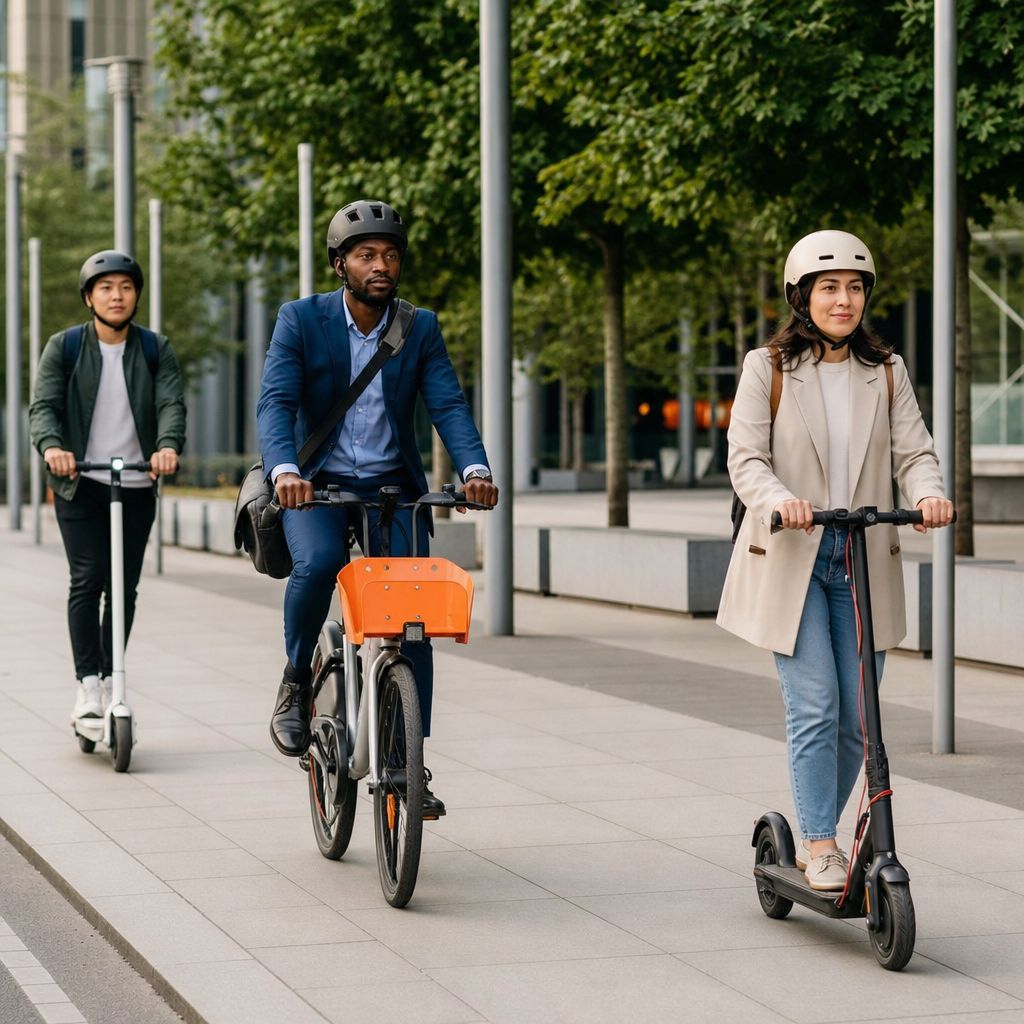
Micromobility encompasses a range of vehicles that are generally powered by electricity or human effort, with a focus on compactness and accessibility. These vehicles are designed to navigate dense urban areas where larger vehicles may struggle with space constraints or traffic congestion. The term gained prominence in the early 2010s as shared mobility services, such as bike-sharing and e-scooter rentals, began to proliferate in cities worldwide. The rise of micromobility is closely tied to advancements in battery technology, which have made electric-powered vehicles more viable for short-distance travel.
The defining characteristics of micromobility vehicles include their low speed, typically not exceeding 25 kilometers per hour (km/h), and their lightweight construction, often weighing less than 500 kilograms (kg). These vehicles are intended for personal use, though shared models have become increasingly popular. Micromobility solutions are often integrated into broader urban mobility strategies, complementing public transport systems by addressing the "last mile" challenge—the gap between a traveler's origin or destination and the nearest public transport hub.
Regulatory frameworks for micromobility vary significantly across regions, reflecting differences in urban infrastructure, cultural attitudes toward transportation, and safety concerns. In some cities, micromobility vehicles are subject to strict speed limits, designated lanes, and licensing requirements, while in others, they operate in a more permissive environment. The rapid adoption of micromobility has also sparked debates about safety, infrastructure needs, and the equitable distribution of urban space.
From an environmental perspective, micromobility is often touted as a sustainable alternative to cars, particularly for short trips. Electric-powered micromobility vehicles produce zero tailpipe emissions, and even human-powered options like bicycles contribute to reducing greenhouse gas emissions. However, the environmental benefits depend on factors such as the energy source used for charging, the lifespan of the vehicles, and the efficiency of their production and disposal processes. Life cycle assessments (LCAs) are increasingly used to evaluate the true environmental impact of micromobility solutions (source: International Transport Forum, 2020).
Technical Specifications
Micromobility vehicles are engineered to balance portability, efficiency, and safety. Most electric-powered models rely on lithium-ion batteries, which provide a range of 20 to 100 kilometers (km) per charge, depending on the vehicle type and battery capacity. Charging times vary, with some models capable of reaching 80% capacity in under an hour using fast-charging technology. The power output of these vehicles typically ranges from 250 to 1000 watts (W), sufficient for urban speeds but insufficient for highway use.
The weight of micromobility vehicles is a critical factor in their design. Lighter vehicles are easier to maneuver and transport but may sacrifice stability or battery capacity. For example, e-scooters often weigh between 10 and 15 kg, while e-bikes can range from 20 to 30 kg. The materials used in construction, such as aluminum alloys or carbon fiber, are chosen for their strength-to-weight ratio. Safety features, including anti-lock braking systems (ABS), regenerative braking, and LED lighting, are increasingly standard in newer models.
Connectivity is another key aspect of modern micromobility. Many shared micromobility services incorporate GPS tracking, mobile app integration, and IoT (Internet of Things) sensors to monitor vehicle location, battery status, and usage patterns. These technologies enable operators to optimize fleet distribution, prevent theft, and provide users with real-time information about vehicle availability. However, the collection of user data has raised privacy concerns, prompting calls for stricter regulations on data handling practices (source: European Data Protection Board, 2021).
Historical Development
The concept of micromobility is not new, but its modern iteration has been shaped by technological and societal changes. Bicycles, one of the earliest forms of micromobility, became widely popular in the late 19th century as a personal transport solution. The introduction of motorized bicycles in the early 20th century laid the groundwork for today's e-bikes, though these early models were limited by the technology of the time. The oil crises of the 1970s renewed interest in alternative transport modes, leading to the development of more efficient and lightweight vehicles.
The 21st century saw a resurgence of micromobility, driven by urbanization, environmental concerns, and advancements in battery technology. The launch of bike-sharing systems in cities like Paris (Vélib', 2007) and Hangzhou (2008) demonstrated the potential of shared micromobility. However, it was the introduction of dockless e-scooters in 2017, pioneered by companies like Lime and Bird, that catapulted micromobility into the mainstream. These services leveraged smartphone apps and GPS technology to create a seamless user experience, though their rapid expansion also led to challenges such as sidewalk clutter and regulatory backlash.
Governments and city planners have since grappled with how to integrate micromobility into existing transport networks. Some cities, such as Copenhagen and Amsterdam, have invested heavily in cycling infrastructure, creating dedicated lanes and parking facilities. Others, like San Francisco and Barcelona, have implemented strict regulations to manage the proliferation of shared e-scooters, including caps on fleet sizes and mandatory safety training for users. The COVID-19 pandemic further accelerated the adoption of micromobility, as people sought alternatives to crowded public transport (source: McKinsey & Company, 2021).
Application Area
- Urban Commuting: Micromobility is widely used for short-distance commutes, particularly in densely populated cities where traffic congestion and parking limitations make cars impractical. E-scooters, e-bikes, and bicycles provide a flexible and time-efficient way to navigate urban environments, often reducing travel times compared to walking or driving.
- Last-Mile Solutions: One of the most significant applications of micromobility is addressing the "last mile" problem in public transport. Many commuters face a gap between their final destination and the nearest bus stop, train station, or metro. Micromobility vehicles bridge this gap, making public transport more accessible and reducing reliance on private cars.
- Logistics and Delivery: Micromobility is increasingly used for urban logistics, particularly for last-mile delivery services. Companies like Amazon, DHL, and local courier services employ cargo e-bikes and e-scooters to transport goods in congested areas, reducing delivery times and emissions. These vehicles are often equipped with storage compartments or trailers to accommodate packages.
- Tourism and Recreation: In tourist-heavy cities, micromobility offers visitors a convenient way to explore urban areas without the need for car rentals. Bike-sharing and e-scooter services are popular among tourists, providing a flexible and eco-friendly means of sightseeing. Some cities have introduced guided micromobility tours to enhance the tourist experience.
- Corporate Mobility: Businesses are adopting micromobility solutions to provide employees with flexible transport options. Corporate mobility programs may include subsidized e-bike purchases, shared micromobility fleets, or incentives for employees who choose sustainable transport modes. These initiatives align with corporate sustainability goals and can improve employee satisfaction.
Well Known Examples
- E-Scooters (e.g., Lime, Bird, Tier): Electric scooters have become synonymous with micromobility, particularly in urban areas. These vehicles are typically shared and accessed via mobile apps, allowing users to rent them on-demand. E-scooters are prized for their convenience and speed, though their safety record has been a subject of debate. Companies like Lime and Bird have expanded globally, operating in hundreds of cities across North America, Europe, and Asia.
- E-Bikes (e.g., VanMoof, Specialized, Shared Systems like Jump): Electric bicycles combine pedal power with electric assistance, making them ideal for longer distances or hilly terrain. E-bikes are available in both private and shared models, with some cities offering subsidies to encourage their adoption. VanMoof, a Dutch e-bike manufacturer, has gained a reputation for its sleek design and smart features, such as GPS tracking and automatic gear shifting.
- Cargo Bikes (e.g., Urban Arrow, Riese & Müller): Cargo bikes are designed to transport goods or passengers, making them a popular choice for families and businesses. These vehicles often feature extended frames or trailers to accommodate larger loads. Urban Arrow, a Dutch company, produces cargo bikes that are widely used for urban logistics and family transport, offering a sustainable alternative to delivery vans.
- Bike-Sharing Systems (e.g., Citi Bike, Santander Cycles): Bike-sharing programs have been a staple of urban micromobility for decades. Systems like Citi Bike in New York and Santander Cycles in London provide thousands of bicycles for short-term rental, often integrated with public transport networks. These programs have proven effective in reducing car usage and promoting active lifestyles.
- One-Wheel and Hoverboard Devices (e.g., Onewheel, Segway): While less common than e-scooters or e-bikes, one-wheel and hoverboard devices cater to niche markets. Onewheel, for example, produces self-balancing electric skateboards that appeal to enthusiasts and commuters alike. These devices offer a unique riding experience but often face stricter regulations due to their higher speeds and perceived safety risks.
Risks and Challenges
- Safety Concerns: Micromobility vehicles, particularly e-scooters, have been associated with a rise in accidents and injuries. Factors such as uneven road surfaces, lack of dedicated infrastructure, and user inexperience contribute to these risks. Studies have shown that e-scooter riders are more likely to suffer head injuries compared to cyclists, highlighting the need for improved safety measures, such as mandatory helmet use and better road design (source: Centers for Disease Control and Prevention, 2019).
- Regulatory Uncertainty: The rapid growth of micromobility has outpaced regulatory frameworks in many regions. Cities struggle to balance innovation with safety, leading to inconsistent rules on vehicle speeds, parking, and licensing. Some municipalities have imposed temporary bans or strict caps on shared micromobility fleets, creating uncertainty for operators and users alike.
- Infrastructure Gaps: Micromobility vehicles require dedicated infrastructure, such as bike lanes and charging stations, to operate safely and efficiently. However, many cities lack the necessary infrastructure, forcing riders to share roads with cars or navigate crowded sidewalks. The cost of building and maintaining this infrastructure can be prohibitive, particularly in cash-strapped municipalities.
- Environmental Impact: While micromobility is often promoted as a green alternative to cars, its environmental benefits are not guaranteed. The production and disposal of lithium-ion batteries, for example, have significant environmental costs, including resource extraction and waste management challenges. Additionally, the short lifespan of some shared micromobility vehicles—often just a few years—raises concerns about sustainability (source: European Environment Agency, 2020).
- Equity and Accessibility: Micromobility services are not equally accessible to all segments of the population. High costs, limited availability in low-income neighborhoods, and digital divides (e.g., lack of smartphone access) can exclude certain groups from benefiting from these services. Cities are increasingly exploring ways to make micromobility more inclusive, such as offering subsidized rates or expanding service areas.
- Vandalism and Theft: Shared micromobility vehicles are vulnerable to vandalism, theft, and misuse. Operators report high rates of damage, ranging from broken parts to graffiti, which increase maintenance costs and reduce vehicle lifespans. GPS tracking and geofencing technologies have been implemented to mitigate these issues, but challenges remain.
Similar Terms
- Active Mobility: Active mobility refers to human-powered modes of transport, such as walking, cycling, and skateboarding. Unlike micromobility, which may include electric-powered vehicles, active mobility relies solely on physical effort. Both concepts share a focus on sustainability and urban accessibility, but active mobility is often more inclusive and less reliant on technology.
- Shared Mobility: Shared mobility encompasses a broader range of transport services where vehicles are shared among users, including car-sharing, ride-hailing, and bike-sharing. Micromobility is a subset of shared mobility, specifically focusing on small, lightweight vehicles. Shared mobility services often integrate micromobility options to provide comprehensive transport solutions.
- Personal Mobility Devices (PMDs): Personal mobility devices are a category of vehicles designed for individual use, including e-scooters, hoverboards, and electric unicycles. The term is often used interchangeably with micromobility, though PMDs may include devices that are not strictly classified as micromobility, such as motorized wheelchairs or mobility scooters for people with disabilities.
- Light Electric Vehicles (LEVs): Light electric vehicles are a broader category that includes micromobility vehicles as well as slightly larger electric vehicles, such as electric motorcycles and three-wheeled cars. LEVs are defined by their electric powertrains and lightweight construction, but they may exceed the speed or weight limits typically associated with micromobility.
Summary
Micromobility represents a transformative shift in urban transport, offering a sustainable and efficient solution for short-distance travel. By leveraging lightweight, electric-powered vehicles, micromobility addresses key challenges such as congestion, pollution, and the last-mile problem. However, its success depends on overcoming significant hurdles, including safety concerns, regulatory uncertainty, and infrastructure gaps. As cities continue to evolve, micromobility is likely to play an increasingly central role in shaping the future of urban mobility, provided that its integration is managed thoughtfully and inclusively.
The environmental and social benefits of micromobility are substantial, but they must be weighed against the risks and challenges associated with its adoption. Collaboration between policymakers, operators, and communities will be essential to ensure that micromobility fulfills its potential as a cornerstone of sustainable urban transport.
--