
English: Amsterdam Canals Netherlands / Español: Canales de Ámsterdam Países Bajos / Português: Canais de Amsterdã Países Baixos / Français: Canaux d'Amsterdam Pays-Bas / Italiano: Canali di Amsterdam Paesi Bassi
The Amsterdam Canals Netherlands represent a historic and functional waterway network that has shaped the city's identity for centuries. Originally designed for defense, water management, and trade, these canals now serve as a multifaceted infrastructure supporting urban mobility, logistics, and tourism. Their integration into modern transport systems highlights their enduring relevance in a rapidly evolving metropolitan landscape.
General Description
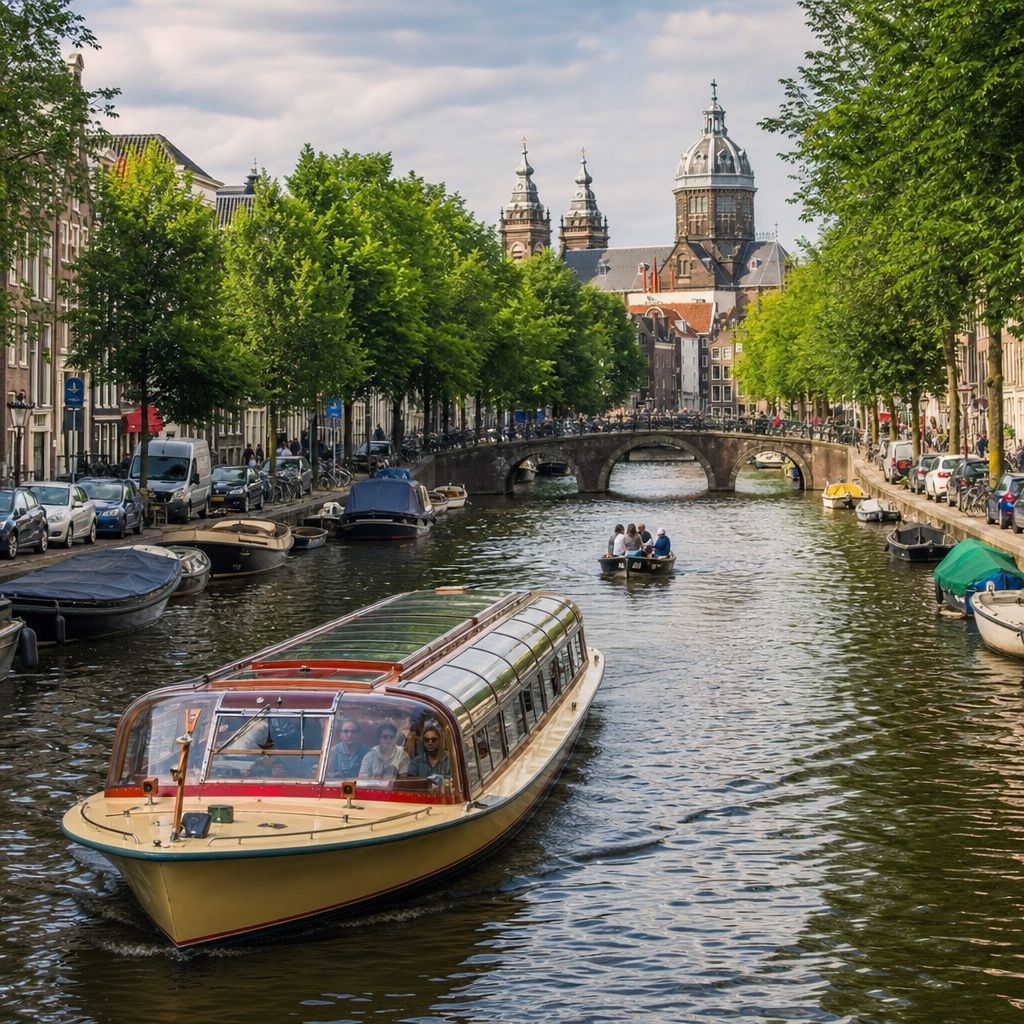
The Amsterdam canal system, known locally as the Grachtengordel, is a UNESCO World Heritage Site and one of the most iconic urban waterway networks in the world. Spanning over 100 kilometers, the canals were constructed during the Dutch Golden Age in the 17th century as part of a comprehensive urban expansion plan. The three main canals—Herengracht, Keizersgracht, and Prinsengracht—form concentric belts around the city center, interconnected by smaller waterways and bridges. This design was not merely aesthetic but served practical purposes, including flood control, waste management, and the efficient movement of goods.
The canals were engineered with precision, utilizing a system of locks, sluices, and dikes to regulate water levels and prevent flooding. The construction involved advanced techniques for the time, such as pile driving and the use of windmills to drain excess water. Over time, the canals evolved from a primarily logistical infrastructure into a cultural and economic backbone of the city. Today, they accommodate a diverse range of activities, from commercial shipping and public transportation to recreational boating and residential living.
The Amsterdam canals are also a testament to the city's adaptive urban planning. Unlike many historic waterways that have been filled in or repurposed, Amsterdam's canals have retained their functionality while integrating modern technologies. For example, electric and hybrid boats are increasingly replacing diesel-powered vessels to reduce emissions, aligning with the city's sustainability goals. Additionally, the canals play a critical role in the city's flood defense strategy, particularly in the context of rising sea levels and climate change.
Historical Development
The origins of the Amsterdam canals can be traced back to the medieval period, when the city was a small fishing village built on peat bogs. As trade expanded in the 16th and 17th centuries, Amsterdam's population grew rapidly, necessitating a more organized urban layout. The Grachtengordel was conceived as part of the Derde Uitleg (Third Expansion) plan, which aimed to create a structured, defensible, and economically efficient city. The canals were dug by hand, with laborers using simple tools to excavate the soft soil, which was then reinforced with wooden pilings.
By the 17th century, Amsterdam had become the commercial hub of Europe, and the canals were central to its success. Goods from around the world were transported via ships to the city's warehouses, many of which were built along the canals. The Amsterdamse Grachtenhuizen (canal houses), with their narrow facades and deep storage cellars, were designed to maximize storage space while minimizing property taxes, which were calculated based on street frontage. This architectural style remains a defining feature of the city today.
In the 19th and 20th centuries, the canals faced challenges from industrialization and urbanization. The rise of rail and road transport reduced the canals' dominance in logistics, leading to periods of neglect. However, the mid-20th century saw a renewed appreciation for the canals' historical and cultural value. Restoration efforts began in the 1970s, culminating in the UNESCO World Heritage designation in 2010. Today, the canals are a symbol of Amsterdam's resilience and innovation, balancing heritage preservation with modern urban demands.
Technical Infrastructure
The Amsterdam canal system is supported by a complex technical infrastructure that ensures its functionality and safety. The water levels are managed by a network of pumps, sluices, and locks, which are operated by the city's water authority, Waternet. The IJmuiden Locks, located at the mouth of the North Sea Canal, play a crucial role in regulating water flow between the canals and the sea. These locks are among the largest in the world, capable of accommodating vessels up to 400 meters in length and 50 meters in width (source: Port of Amsterdam).
The canals are also equipped with modern monitoring systems to track water quality, depth, and flow rates. Sensors and automated gates help prevent flooding during heavy rainfall or storm surges, a critical function given Amsterdam's low-lying geography. The city's Water Management Plan outlines strategies for maintaining the canals' structural integrity, including regular dredging to remove sediment and debris. Dredging is essential to ensure navigable depths for boats, particularly in the narrower inner canals where silt accumulation is common.
Bridges are another vital component of the canal infrastructure. Amsterdam has over 1,500 bridges, many of which are movable to allow the passage of taller vessels. The Magere Brug (Skinny Bridge) and Blauwbrug (Blue Bridge) are iconic examples, combining historical design with modern engineering. The bridges are maintained by the city's public works department, which ensures they remain safe and functional for both pedestrians and vehicles.
Application Area
- Urban Logistics: The canals serve as a secondary transport network for goods, particularly for last-mile deliveries in the city center. Companies like Canal Company and Boaty specialize in transporting goods via electric cargo boats, reducing road congestion and emissions. This mode of transport is particularly effective for bulky or heavy items, such as construction materials or waste.
- Public Transportation: The Amsterdam Ferry Network, operated by GVB, provides free ferry services across the IJ River, connecting the city center with Amsterdam Noord. Additionally, water taxis and aquabuses offer on-demand transport for commuters and tourists, supplementing the city's tram and bus networks. The IJtram, a hybrid tram-boat service, is an example of innovative multimodal transport.
- Tourism and Recreation: The canals are a major tourist attraction, with companies like Lovers Canal Cruises and Rederij Kooij offering guided boat tours. Recreational boating is also popular, with rental services providing electric sloops and pedal boats for private use. The Amsterdam Light Festival, an annual event, transforms the canals into a illuminated art exhibition, attracting thousands of visitors.
- Residential and Commercial Use: Many of the canal houses are now residential or commercial properties, with some converted into hotels, offices, or museums. The Museum Het Grachtenhuis (Canal House Museum) offers insights into the history and architecture of the canal houses. Floating homes and houseboats are also a unique feature of Amsterdam's housing market, with over 2,500 such dwellings registered in the city.
- Emergency Services: The canals are used by emergency services, including the fire brigade and police, for rapid response in areas with limited road access. Fireboats equipped with high-pressure pumps can draw water directly from the canals, a critical advantage in a city with narrow streets and historic buildings.
Well Known Examples
- Singel: The innermost canal of the Grachtengordel, the Singel was originally a moat surrounding the medieval city. Today, it is lined with historic buildings, including the Bloemenmarkt (floating flower market), one of Amsterdam's most famous tourist attractions. The Singel is also home to the Torensluis, the widest bridge in the city, which dates back to 1648.
- Amstel River: While not part of the Grachtengordel, the Amstel River is a major waterway that flows through the city center. It is spanned by several iconic bridges, including the Magere Brug and Blauwbrug. The Amstel is also the site of the annual Amsterdam Pride canal parade, a highlight of the city's LGBTQ+ celebrations.
- North Sea Canal: Connecting Amsterdam to the North Sea, the North Sea Canal is a critical artery for commercial shipping. The Port of Amsterdam, one of Europe's largest ports, is located along this canal. The canal is also used for recreational sailing and hosts events like the Sail Amsterdam festival, which attracts tall ships from around the world.
- Brouwersgracht: This canal marks the northern boundary of the Grachtengordel and is known for its picturesque houseboats and historic warehouses. The Brouwersgracht was once a hub for the brewing industry, as its name (Brouwers means "brewers") suggests. Today, it is a popular residential area with a mix of modern and historic architecture.
- IJ River: The IJ is a body of water that separates Amsterdam's city center from Amsterdam Noord. It is a key transport route for ferries, cargo ships, and recreational boats. The Eye Film Museum, a striking modern building, is located on the northern bank of the IJ and is accessible by ferry.
Risks and Challenges
- Flooding: Amsterdam is located below sea level, making it vulnerable to flooding from both the North Sea and heavy rainfall. While the canal system is designed to mitigate this risk, climate change and rising sea levels pose a long-term threat. The city's Delta Programme outlines strategies for flood protection, including the reinforcement of dikes and the construction of storm surge barriers.
- Water Pollution: The canals are susceptible to pollution from various sources, including boat traffic, urban runoff, and illegal waste disposal. The city has implemented measures to improve water quality, such as banning diesel-powered boats in the inner canals and promoting electric vessels. However, ongoing monitoring and enforcement are necessary to maintain clean water.
- Overcrowding: The popularity of the canals for tourism and recreation has led to congestion, particularly during peak seasons. This can result in delays for commercial and emergency vessels, as well as safety risks for pedestrians and cyclists on the bridges. The city has introduced regulations to manage boat traffic, including speed limits and designated mooring zones.
- Structural Degradation: The historic infrastructure of the canals, including bridges and quay walls, requires regular maintenance to prevent deterioration. Many of the quay walls are over 100 years old and are at risk of collapse due to age and water pressure. The city has allocated significant funds for restoration projects, but the scale of the work is immense.
- Balancing Heritage and Modernization: Preserving the historic character of the canals while accommodating modern transport and urban development is a ongoing challenge. For example, the introduction of electric boats and floating homes must be carefully managed to avoid disrupting the canals' aesthetic and functional integrity. The city's Canal Ring Management Plan provides guidelines for sustainable development.
Similar Terms
- Venice Canals (Italy): Like Amsterdam, Venice is renowned for its extensive canal system, which serves as the primary mode of transport in the city. However, Venice's canals are natural waterways, whereas Amsterdam's were artificially constructed. Both cities face similar challenges, such as flooding, pollution, and overcrowding.
- Bruges Canals (Belgium): Often referred to as the "Venice of the North," Bruges features a network of medieval canals that are a UNESCO World Heritage Site. The canals were originally used for trade and defense, similar to Amsterdam's, but are now primarily a tourist attraction. Bruges' canals are narrower and less integrated into modern transport systems than Amsterdam's.
- Giethoorn Canals (Netherlands): Known as the "Dutch Venice," Giethoorn is a village in the Netherlands with a network of canals that serve as the main transport routes. Unlike Amsterdam, Giethoorn's canals are car-free, and residents rely on boats for transportation. The village is a popular tourist destination, offering a quieter alternative to Amsterdam's bustling waterways.
- Hamburg Speicherstadt (Germany): The Speicherstadt in Hamburg is the world's largest warehouse district, built on a network of canals and islands. Like Amsterdam's canals, it was designed for trade and logistics, with warehouses storing goods such as coffee, tea, and spices. The Speicherstadt is a UNESCO World Heritage Site and a key part of Hamburg's port infrastructure.
Summary
The Amsterdam Canals Netherlands are a unique blend of historical heritage and modern functionality, playing a vital role in the city's transport, logistics, and urban mobility. From their origins as a defensive and commercial infrastructure to their current status as a UNESCO World Heritage Site, the canals have adapted to the changing needs of the city. They support a wide range of activities, including goods transport, public transportation, tourism, and residential living, while also posing challenges such as flooding, pollution, and structural degradation.
As Amsterdam continues to grow and evolve, the canals remain a symbol of the city's ingenuity and resilience. Balancing preservation with innovation will be key to ensuring their sustainability for future generations. Whether as a mode of transport, a cultural landmark, or a recreational space, the Amsterdam canals are an indispensable part of the city's identity.
--