
Deutsch: Infrastrukturengpässe / Español: Cuellos de botella en la infraestructura / Português: Gargalos de infraestrutura / Français: Goulots d'étranglement infrastructurels / Italiano: Colli di bottiglia infrastrutturali
Infrastructure bottlenecks represent critical constraints within transport, logistics, and mobility systems that limit efficiency, capacity, or performance. These bottlenecks arise when demand for infrastructure exceeds its available supply, leading to delays, increased costs, and reduced reliability. They are a persistent challenge in both developed and developing economies, often exacerbated by rapid urbanization, population growth, and evolving trade patterns. Addressing these constraints requires coordinated investments, technological innovation, and policy reforms to ensure sustainable and resilient mobility networks.
General Description
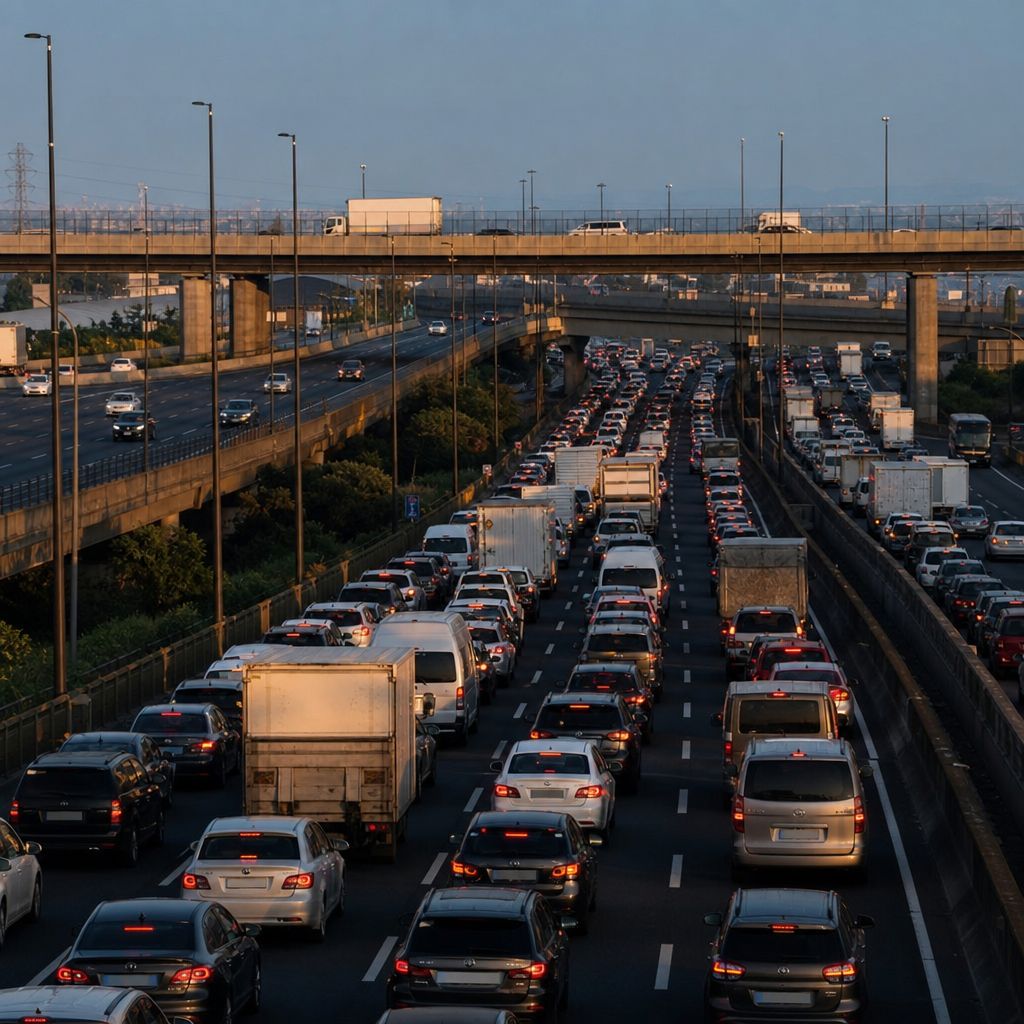
Infrastructure bottlenecks occur when physical, operational, or regulatory limitations within a transport or logistics system create inefficiencies that hinder the smooth flow of goods, services, or people. These constraints can manifest in various forms, such as congested highways, overloaded ports, underdeveloped rail networks, or outdated air traffic control systems. Unlike temporary disruptions caused by accidents or weather events, bottlenecks are structural issues that persist over time, often worsening as demand grows without corresponding upgrades to capacity.
The impact of infrastructure bottlenecks extends beyond immediate delays. They contribute to higher operational costs for businesses, increased emissions due to idling vehicles, and reduced economic competitiveness. For example, a port bottleneck can delay the delivery of raw materials, disrupting manufacturing supply chains and leading to production slowdowns. Similarly, congested urban roads increase travel times for commuters, reducing productivity and quality of life. These challenges are particularly acute in regions where infrastructure development has not kept pace with economic growth or shifting trade routes.
Bottlenecks are not limited to physical infrastructure. Operational inefficiencies, such as outdated customs procedures or fragmented regulatory frameworks, can also create systemic delays. For instance, inconsistent border controls between countries can slow cross-border freight movements, even if the physical infrastructure is adequate. Similarly, a lack of intermodal connectivity—where different transport modes (e.g., rail, road, and maritime) fail to integrate seamlessly—can create logistical bottlenecks that increase transit times and costs.
The identification and mitigation of infrastructure bottlenecks require a multi-faceted approach. Governments and private stakeholders often rely on data-driven analyses, such as traffic flow studies or port throughput assessments, to pinpoint critical constraints. Solutions may include expanding physical capacity, adopting smart technologies (e.g., intelligent traffic management systems), or implementing policy reforms to streamline operations. However, addressing these challenges is complex, as it involves balancing economic, environmental, and social considerations while ensuring long-term sustainability.
Types of Infrastructure Bottlenecks
Infrastructure bottlenecks can be categorized based on their origin, impact, or the transport mode they affect. Understanding these distinctions is essential for developing targeted solutions.
One common type is capacity bottlenecks, which occur when infrastructure is unable to handle the volume of traffic or freight it encounters. Examples include highways with insufficient lanes to accommodate peak-hour traffic or ports with limited berths for docking vessels. Capacity bottlenecks are often the most visible and directly measurable, as they result in congestion, longer wait times, and increased operational costs. Solutions typically involve expanding physical infrastructure, such as adding lanes to roads or constructing new terminals at ports.
Another critical category is operational bottlenecks, which arise from inefficiencies in how infrastructure is managed or utilized. These bottlenecks may not be immediately apparent but can significantly disrupt the flow of goods or people. For instance, a lack of coordination between rail and maritime transport can lead to delays in loading or unloading cargo, even if the port itself has sufficient capacity. Operational bottlenecks often require process improvements, such as implementing digital platforms for real-time tracking or adopting standardized procedures for customs clearance.
Regulatory bottlenecks are another pervasive challenge, particularly in cross-border logistics. These occur when legal or administrative barriers slow down the movement of goods or people. For example, differing safety standards or import regulations between countries can create delays at border crossings. Addressing regulatory bottlenecks often involves harmonizing policies, simplifying documentation requirements, or establishing mutual recognition agreements between jurisdictions. The World Trade Organization (WTO) and regional trade blocs, such as the European Union, frequently work to reduce these barriers through trade facilitation initiatives.
Finally, technological bottlenecks emerge when outdated systems or a lack of innovation limit the efficiency of infrastructure. For example, air traffic control systems that rely on analog technology may struggle to manage increasing air traffic volumes, leading to delays and reduced safety. Similarly, ports that lack automated cargo handling equipment may experience slower turnaround times for vessels. Upgrading to modern technologies, such as artificial intelligence (AI) for predictive maintenance or blockchain for secure documentation, can help alleviate these bottlenecks.
Application Area
- Urban Mobility: In cities, infrastructure bottlenecks often manifest as traffic congestion on roads, overcrowded public transport systems, or insufficient cycling and pedestrian infrastructure. These constraints reduce the efficiency of urban mobility, increase travel times, and contribute to air pollution. Solutions may include expanding public transport networks, implementing congestion pricing, or promoting alternative modes of transport, such as bike-sharing schemes.
- Freight and Logistics: Bottlenecks in freight transport can occur at critical nodes, such as ports, rail terminals, or distribution centers. These constraints disrupt supply chains, leading to delays in the delivery of goods and increased costs for businesses. Addressing these challenges may involve investing in intermodal hubs, improving last-mile delivery infrastructure, or adopting digital tools for real-time tracking and route optimization.
- Cross-Border Trade: Infrastructure bottlenecks at border crossings or customs checkpoints can significantly slow the movement of goods between countries. These delays increase trade costs and reduce the competitiveness of businesses. Solutions often focus on streamlining customs procedures, harmonizing regulations, or investing in infrastructure to facilitate faster border crossings, such as dedicated freight corridors or pre-clearance systems.
- Air Transport: Airports and air traffic control systems are prone to bottlenecks, particularly during peak travel periods. Congestion at airports can lead to flight delays, increased fuel consumption, and higher operational costs for airlines. Mitigation strategies may include expanding airport capacity, optimizing flight routes, or adopting advanced air traffic management technologies to improve efficiency.
- Rural Connectivity: In rural areas, infrastructure bottlenecks often stem from underdeveloped transport networks, such as poorly maintained roads or limited access to rail services. These constraints isolate communities, limit access to markets, and hinder economic development. Solutions may involve investing in rural road networks, improving public transport services, or leveraging digital technologies to enhance connectivity.
Well Known Examples
- Panama Canal: The Panama Canal is a critical global trade route connecting the Atlantic and Pacific Oceans. However, its limited capacity and lock system create bottlenecks, particularly for larger vessels. During peak periods, ships may experience significant delays, increasing transit times and costs. The expansion of the canal in 2016, which introduced a new set of locks, was designed to alleviate these bottlenecks by accommodating larger "New Panamax" vessels. Despite this upgrade, demand continues to outpace capacity, highlighting the ongoing challenge of managing infrastructure constraints in global trade.
- Los Angeles and Long Beach Ports (USA): The ports of Los Angeles and Long Beach are among the busiest in the world, handling a significant portion of U.S. containerized imports. However, they frequently experience bottlenecks due to high cargo volumes, limited berth space, and inefficiencies in cargo handling. During the COVID-19 pandemic, these bottlenecks worsened, leading to record delays and supply chain disruptions. Efforts to address these challenges have included expanding terminal capacity, implementing 24/7 operations, and adopting digital tools for cargo tracking and coordination.
- Dover-Calais Crossing (UK/France): The Dover-Calais crossing is a critical route for freight and passenger traffic between the United Kingdom and continental Europe. However, it is prone to bottlenecks due to high traffic volumes, customs checks, and limited capacity at the Channel Tunnel and ferry terminals. Brexit has exacerbated these challenges, as new border controls have increased processing times and created delays. Solutions have focused on improving infrastructure, such as expanding lorry parking facilities, and streamlining customs procedures to reduce wait times.
- Mumbai Port (India): Mumbai Port, one of India's largest and oldest ports, faces significant bottlenecks due to limited capacity, outdated infrastructure, and inefficiencies in cargo handling. These constraints have led to congestion, longer turnaround times for vessels, and higher costs for businesses. To address these challenges, the Indian government has invested in expanding port capacity, modernizing cargo handling equipment, and developing alternative ports, such as Jawaharlal Nehru Port, to distribute traffic more evenly.
- European Rail Freight Corridors: Rail freight in Europe is often hampered by bottlenecks caused by differing national standards, limited track capacity, and inefficiencies in cross-border operations. These constraints reduce the competitiveness of rail transport compared to road freight. The European Union has launched initiatives, such as the Trans-European Transport Network (TEN-T), to address these bottlenecks by harmonizing standards, expanding rail capacity, and improving interoperability between national rail systems.
Risks and Challenges
- Economic Costs: Infrastructure bottlenecks impose significant economic costs on businesses and economies. Delays in the movement of goods can disrupt supply chains, leading to production slowdowns, lost sales, and higher inventory costs. For example, a study by the World Bank estimated that inefficiencies in logistics infrastructure can increase trade costs by up to 15%, reducing the competitiveness of businesses and economies. These costs are particularly burdensome for small and medium-sized enterprises (SMEs), which may lack the resources to absorb additional expenses.
- Environmental Impact: Bottlenecks contribute to environmental degradation by increasing emissions from idling vehicles, longer transit times, and inefficient use of resources. For instance, congested roads lead to higher fuel consumption and greenhouse gas emissions, exacerbating climate change. Similarly, delays at ports can result in vessels idling for extended periods, increasing air pollution and noise levels. Addressing these challenges requires integrating sustainability considerations into infrastructure planning, such as promoting low-emission transport modes or adopting green technologies.
- Social Inequality: Infrastructure bottlenecks can exacerbate social inequalities by limiting access to opportunities, services, and markets. For example, rural communities with poor transport connectivity may struggle to access healthcare, education, or employment opportunities. Similarly, low-income urban residents may face longer commute times and higher transport costs due to inadequate public transport infrastructure. Addressing these disparities requires targeted investments in underserved areas and inclusive planning processes that prioritize equitable access to infrastructure.
- Technological and Innovation Gaps: Outdated infrastructure and a lack of innovation can create bottlenecks that hinder the adoption of new technologies. For example, ports that rely on manual cargo handling processes may struggle to integrate automation or digital tracking systems. Similarly, cities with outdated traffic management systems may find it difficult to implement smart mobility solutions, such as real-time traffic monitoring or adaptive signal control. Closing these gaps requires investments in modernizing infrastructure and fostering innovation through public-private partnerships.
- Political and Regulatory Barriers: Infrastructure bottlenecks are often exacerbated by political and regulatory challenges, such as fragmented governance, conflicting priorities, or resistance to change. For example, cross-border infrastructure projects may face delays due to differing national regulations or lack of coordination between governments. Similarly, public opposition to infrastructure expansion, such as new highways or rail lines, can stall critical projects. Overcoming these barriers requires strong political leadership, stakeholder engagement, and transparent decision-making processes.
- Climate Change and Resilience: Climate change poses a growing risk to infrastructure, as extreme weather events, such as floods, storms, or heatwaves, can disrupt transport networks and exacerbate bottlenecks. For example, rising sea levels threaten port infrastructure, while extreme heat can damage road surfaces and rail tracks. Building resilience into infrastructure requires incorporating climate adaptation measures, such as flood defenses, heat-resistant materials, and redundant systems to ensure continuity during disruptions.
Similar Terms
- Supply Chain Disruptions: While infrastructure bottlenecks are a specific type of supply chain disruption, the latter term encompasses a broader range of challenges, including natural disasters, geopolitical conflicts, or labor strikes. Supply chain disruptions can occur independently of infrastructure constraints but may be exacerbated by them. For example, a port bottleneck can amplify the impact of a labor strike, leading to more severe delays in the movement of goods.
- Capacity Constraints: Capacity constraints refer to limitations in the ability of a system to handle demand, whether due to physical, operational, or regulatory factors. Infrastructure bottlenecks are a subset of capacity constraints, specifically related to transport and logistics infrastructure. For instance, a highway with insufficient lanes to accommodate traffic is both a capacity constraint and an infrastructure bottleneck.
- Logistics Inefficiencies: Logistics inefficiencies encompass a wide range of operational challenges that reduce the efficiency of transport and supply chain systems. These may include poor route planning, inadequate inventory management, or inefficient cargo handling processes. Infrastructure bottlenecks are a key contributor to logistics inefficiencies, as they create delays and increase costs within the supply chain.
- Transportation Congestion: Transportation congestion refers to the overcrowding of transport networks, such as roads, railways, or airspace, leading to delays and reduced efficiency. While congestion is often a symptom of infrastructure bottlenecks, it can also result from temporary factors, such as accidents or peak-hour traffic. Addressing congestion may require both short-term measures, such as traffic management, and long-term solutions, such as expanding infrastructure capacity.
- Intermodal Connectivity: Intermodal connectivity refers to the seamless integration of different transport modes, such as rail, road, maritime, and air, to facilitate the efficient movement of goods and people. Poor intermodal connectivity can create bottlenecks, as it limits the ability to transfer cargo or passengers between modes quickly and cost-effectively. Improving intermodal connectivity often involves investing in infrastructure, such as intermodal terminals, and adopting standardized processes for cargo handling and documentation.
Summary
Infrastructure bottlenecks are a pervasive challenge in transport, logistics, and mobility systems, limiting efficiency, increasing costs, and reducing resilience. These constraints arise from a combination of physical, operational, regulatory, and technological factors, often exacerbated by growing demand and inadequate investment. Addressing bottlenecks requires a holistic approach that includes expanding capacity, adopting smart technologies, harmonizing regulations, and fostering innovation. The economic, environmental, and social impacts of bottlenecks are significant, underscoring the need for coordinated action by governments, businesses, and communities. By prioritizing sustainable and inclusive infrastructure development, societies can mitigate the risks posed by bottlenecks and build more efficient, resilient, and equitable transport networks for the future.
--