
Deutsch: Auswirkungen des Klimawandels / Español: Impactos del cambio climático / Português: Impactos das mudanças climáticas / Français: Impacts du changement climatique / Italiano: Impatti del cambiamento climatico
The term Climate Change Impacts refers to the wide-ranging effects of global climate shifts on natural and human systems. In the context of transport, logistics, and mobility, these impacts pose significant challenges to infrastructure, operational efficiency, and long-term planning. As temperatures rise, weather patterns become more unpredictable, and extreme events increase in frequency, industries reliant on transportation networks must adapt to mitigate risks and ensure resilience.
General Description
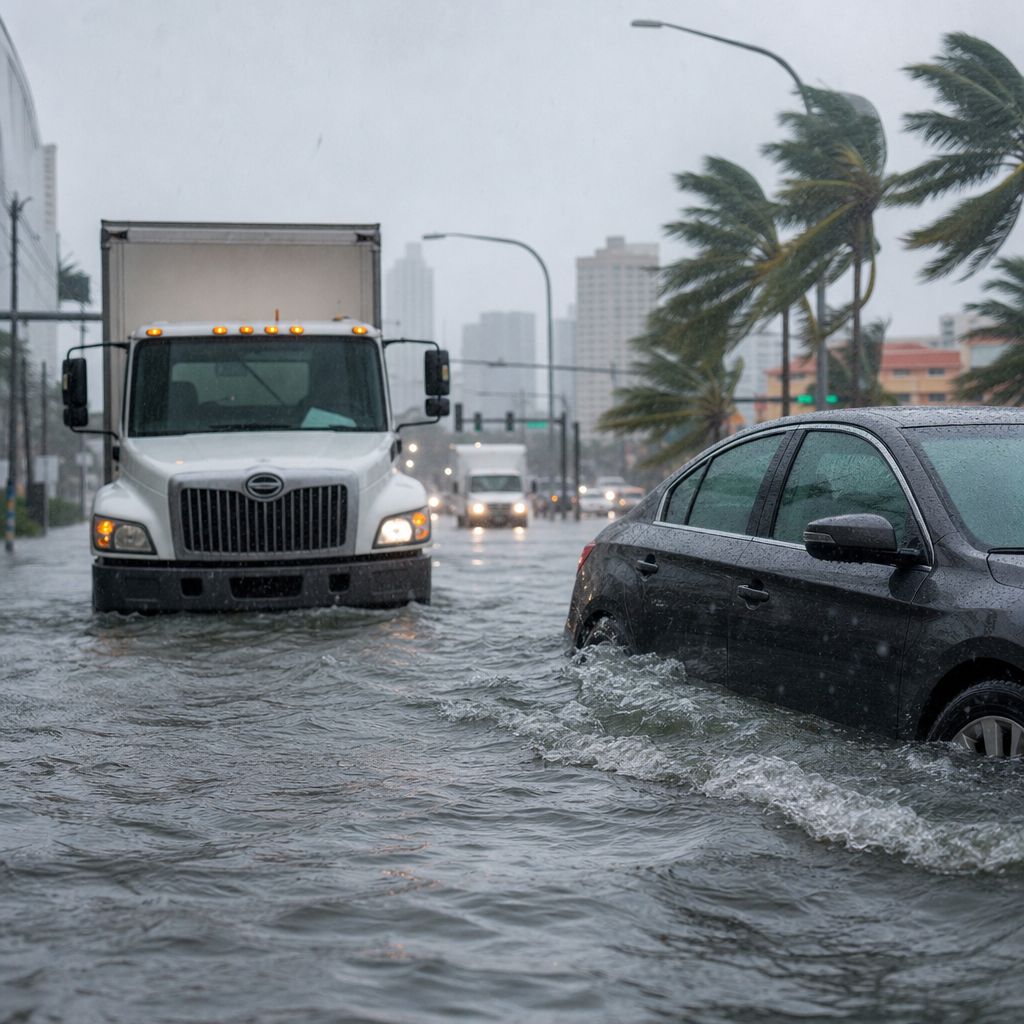
Climate change impacts on transport, logistics, and mobility encompass a variety of physical, economic, and social consequences. These effects are driven by rising global temperatures, altered precipitation patterns, sea-level rise, and an increase in extreme weather events such as storms, floods, and heatwaves. The transport sector, which includes road, rail, air, and maritime networks, is particularly vulnerable due to its dependence on fixed infrastructure and its role in global supply chains. Disruptions in one region can have cascading effects on international trade, production schedules, and the availability of goods.
The logistics industry, which coordinates the movement of goods and services, faces operational challenges as climate-related hazards threaten warehouses, distribution centers, and last-mile delivery systems. For example, flooding can render roads impassable, while extreme heat may damage rail tracks or reduce the efficiency of cooling systems in vehicles. Mobility, encompassing both passenger and freight transport, is similarly affected, as shifts in climate conditions influence travel demand, route planning, and the reliability of public transportation systems.
Adaptation strategies are increasingly necessary to address these challenges. Governments, businesses, and urban planners are investing in climate-resilient infrastructure, such as elevated roads, flood barriers, and heat-resistant materials. Additionally, digital technologies like real-time monitoring and predictive analytics are being deployed to enhance the flexibility of transport networks. However, the scale of the problem requires coordinated action across sectors to reduce greenhouse gas emissions and limit further climate change.
The economic implications of climate change impacts on transport and logistics are substantial. According to the International Transport Forum (ITF), climate-related disruptions could cost the global economy billions of euros annually by 2050 if no adaptive measures are taken. These costs stem from infrastructure damage, delays in shipments, increased insurance premiums, and the need for emergency response efforts. Moreover, the social consequences, such as reduced access to essential services or job losses in affected industries, further underscore the urgency of addressing these challenges.
Key Climate Change Impacts on Transport and Logistics
Several specific climate change impacts directly affect transport, logistics, and mobility systems. These can be categorized into physical, operational, and systemic risks, each requiring tailored mitigation and adaptation strategies.
Physical Impacts
Physical impacts refer to the direct damage caused by climate-related hazards to transport infrastructure. Rising sea levels threaten coastal roads, ports, and airports, particularly in low-lying regions. For instance, the Port of Rotterdam, one of Europe's largest maritime hubs, has already implemented flood protection measures to counteract the risks posed by sea-level rise. Similarly, extreme heat can cause rail tracks to warp or buckle, leading to service disruptions and safety concerns. In 2019, heatwaves in Europe forced rail operators to impose speed restrictions, delaying thousands of passengers and freight shipments.
Heavy precipitation and flooding also pose significant risks. Roads and bridges may become submerged or structurally compromised, while landslides can block critical transport routes in mountainous regions. The 2021 floods in Germany, for example, destroyed sections of the Ahr Valley railway, cutting off communities and disrupting supply chains for months. Such events highlight the need for robust infrastructure design and emergency response plans.
Operational Impacts
Operational impacts arise from the disruption of transport and logistics activities due to climate-related events. Extreme weather can lead to delays, cancellations, or rerouting of shipments, increasing costs and reducing efficiency. For example, hurricanes in the Atlantic Ocean frequently disrupt maritime shipping routes, forcing vessels to take longer, more fuel-intensive detours. Similarly, heatwaves can reduce the payload capacity of aircraft, as higher temperatures decrease air density and lift, requiring longer runways or reduced cargo loads.
Logistics providers must also contend with the increased energy demands of climate control systems. Warehouses and refrigerated transport units consume more power during heatwaves to maintain temperature-sensitive goods, such as pharmaceuticals or perishable food items. This not only raises operational costs but also contributes to higher greenhouse gas emissions if the energy is derived from fossil fuels. The shift toward renewable energy sources and energy-efficient technologies is therefore critical for reducing the sector's carbon footprint.
Systemic Impacts
Systemic impacts refer to the broader, long-term consequences of climate change on transport and logistics networks. These include shifts in trade patterns, changes in demand for certain goods, and the need for new infrastructure investments. For example, melting Arctic ice is opening new shipping routes, such as the Northern Sea Route, which could reduce transit times between Europe and Asia. However, these routes also present challenges, including harsh weather conditions, limited search-and-rescue capabilities, and environmental risks to fragile ecosystems.
Climate change also influences the demand for transport services. Rising temperatures may increase the need for air conditioning in vehicles, while changing precipitation patterns could alter agricultural production, affecting the volume and type of goods transported. Additionally, policies aimed at reducing emissions, such as carbon pricing or low-emission zones, may reshape logistics operations by incentivizing the use of cleaner fuels or alternative transport modes like rail or inland waterways.
Application Area
- Road Transport: Climate change impacts road networks through increased flooding, heat-induced pavement damage, and landslides. Adaptation measures include elevated road designs, improved drainage systems, and the use of heat-resistant materials. For example, the Netherlands has implemented "climate-proof" roads that incorporate water storage capabilities to mitigate flooding risks.
- Rail Transport: Rail systems are vulnerable to extreme heat, which can cause track deformations, and heavy rainfall, which may lead to landslides or washouts. Operators are investing in heat-resistant tracks, real-time monitoring systems, and emergency response protocols to minimize disruptions. In Japan, high-speed rail networks use advanced weather forecasting to adjust schedules during typhoons or heavy snowfall.
- Maritime Transport: Ports and shipping routes face risks from sea-level rise, storm surges, and changing ocean currents. Adaptation strategies include the construction of flood barriers, the elevation of port infrastructure, and the development of alternative routes. The Port of Miami, for instance, has raised its docks and installed pump systems to combat flooding.
- Air Transport: Airports are affected by extreme heat, which reduces aircraft performance, and by storms, which can lead to flight cancellations. Adaptation measures include longer runways, heat-resistant pavement, and improved weather forecasting tools. The Dubai International Airport has implemented heat mitigation strategies, such as shaded parking areas and cooling systems for ground operations.
- Urban Mobility: Cities are particularly vulnerable to climate change impacts due to their dense infrastructure and high population concentrations. Urban mobility systems, including public transport, cycling lanes, and pedestrian pathways, must adapt to heatwaves, flooding, and air quality degradation. Copenhagen, for example, has integrated flood-resistant design into its cycling infrastructure to ensure year-round usability.
Well Known Examples
- Hurricane Katrina (2005): The devastation caused by Hurricane Katrina in the United States highlighted the vulnerability of transport infrastructure to extreme weather. The storm destroyed roads, bridges, and rail lines in Louisiana and Mississippi, disrupting supply chains and delaying recovery efforts for months. The event prompted investments in flood protection systems and resilient infrastructure design.
- European Heatwaves (2019 and 2022): Record-breaking temperatures in Europe led to widespread disruptions in rail and road transport. Rail operators in the UK, France, and Germany imposed speed restrictions to prevent track buckling, while road surfaces in some regions melted, causing delays. These events underscored the need for heat-resistant materials and improved cooling systems in transport infrastructure.
- Thames Barrier (UK): The Thames Barrier, completed in 1982, is a flood defense system designed to protect London from tidal surges. As sea levels rise due to climate change, the barrier's role has become increasingly critical. Regular upgrades and maintenance ensure its continued effectiveness in safeguarding the city's transport networks and economic hubs.
- Northern Sea Route (Russia): The melting of Arctic ice has opened the Northern Sea Route, a shipping lane connecting Europe and Asia. While this route reduces transit times, it also presents challenges, such as unpredictable ice conditions and limited infrastructure. Russia has invested in icebreaker fleets and port facilities to support increased traffic along this route.
- Copenhagen's Cloudburst Plan: In response to increased rainfall and flooding, Copenhagen has implemented a comprehensive "Cloudburst Plan" to protect its urban mobility systems. The plan includes the construction of underground water storage tunnels, elevated roads, and green spaces designed to absorb excess water. These measures aim to minimize disruptions to public transport and cycling infrastructure during heavy rain events.
Risks and Challenges
- Infrastructure Vulnerability: Transport infrastructure, such as roads, bridges, and ports, is often designed for historical climate conditions and may not withstand future extremes. Retrofitting or rebuilding infrastructure to meet new climate standards requires significant investment and long-term planning. For example, the U.S. Federal Highway Administration estimates that climate-resilient infrastructure could cost up to 10% more than traditional designs.
- Operational Disruptions: Climate-related events can cause delays, cancellations, or rerouting of shipments, leading to increased costs and reduced efficiency. The logistics industry must develop contingency plans, such as alternative routes or backup storage facilities, to mitigate these risks. However, such measures may not always be feasible, particularly for time-sensitive goods like medical supplies.
- Economic Costs: The financial burden of climate change impacts on transport and logistics is substantial. According to the European Environment Agency, climate-related damages to transport infrastructure in Europe could reach €15 billion annually by 2050. These costs include repairs, lost revenue, and increased insurance premiums, which may ultimately be passed on to consumers.
- Supply Chain Resilience: Global supply chains are highly interconnected, meaning disruptions in one region can have far-reaching consequences. For example, flooding in Thailand in 2011 disrupted the production of computer hard drives, leading to global shortages. Enhancing supply chain resilience requires diversification of suppliers, improved risk assessment tools, and greater collaboration between stakeholders.
- Policy and Regulatory Uncertainty: Governments are increasingly implementing policies to address climate change, such as carbon pricing or emissions regulations. However, the pace and scope of these policies vary by region, creating uncertainty for transport and logistics providers. Companies must navigate complex regulatory landscapes while investing in sustainable technologies and practices.
- Environmental Trade-offs: Some adaptation measures, such as the construction of flood barriers or the use of air conditioning in vehicles, may have unintended environmental consequences. For example, increased energy consumption for cooling systems could lead to higher greenhouse gas emissions if the energy is not sourced from renewables. Balancing adaptation and mitigation efforts is therefore essential for sustainable transport systems.
Similar Terms
- Climate Resilience: Climate resilience refers to the ability of systems, such as transport networks, to withstand and recover from climate-related disruptions. It involves proactive measures, such as infrastructure upgrades and emergency planning, to minimize vulnerabilities and ensure continuity of operations.
- Sustainable Transport: Sustainable transport encompasses modes of transport that minimize environmental impact, such as public transit, cycling, and electric vehicles. It also includes policies and technologies aimed at reducing emissions and improving energy efficiency in the transport sector.
- Extreme Weather Events: Extreme weather events, such as hurricanes, heatwaves, and floods, are becoming more frequent and intense due to climate change. These events pose significant risks to transport infrastructure and operations, requiring adaptive measures to mitigate their impacts.
- Carbon Footprint: The carbon footprint of transport refers to the total greenhouse gas emissions generated by vehicles, infrastructure, and logistics operations. Reducing the carbon footprint is a key objective of climate change mitigation efforts in the transport sector.
- Adaptation Strategies: Adaptation strategies are measures designed to reduce the vulnerability of transport and logistics systems to climate change impacts. These may include infrastructure upgrades, policy changes, or the adoption of new technologies to enhance resilience.
Summary
The impacts of climate change on transport, logistics, and mobility are multifaceted, affecting infrastructure, operations, and supply chains on a global scale. Rising temperatures, extreme weather events, and sea-level rise pose significant risks to road, rail, maritime, and air transport systems, necessitating proactive adaptation measures. While challenges such as infrastructure vulnerability, economic costs, and regulatory uncertainty persist, examples from around the world demonstrate the potential for innovative solutions to enhance resilience. By investing in climate-resilient infrastructure, adopting sustainable technologies, and fostering international collaboration, the transport and logistics sector can mitigate the risks of climate change and ensure the continued movement of goods and people in a changing world.
--